

The pace I walk now
Notes on a hike where I chose to go slower

I am the kind of woman who has spent her whole life arriving early. Fact - I hate being late for ANYTHING.
Early for school, back when I was doing the school run, early for a flight, early for meetings, parents’ evening and appointments.
Usually ten minutes ahead, always ready to go, with my coat and handbag ready while others are still getting their stuff together, looking for their keys.
I think a lot of us are this kind of woman.
We have juggled building businesses while raising families, managed households, and done so on the assumption that if we slowed down for one moment, the whole thing would collapse.
It is a hard habit to break.
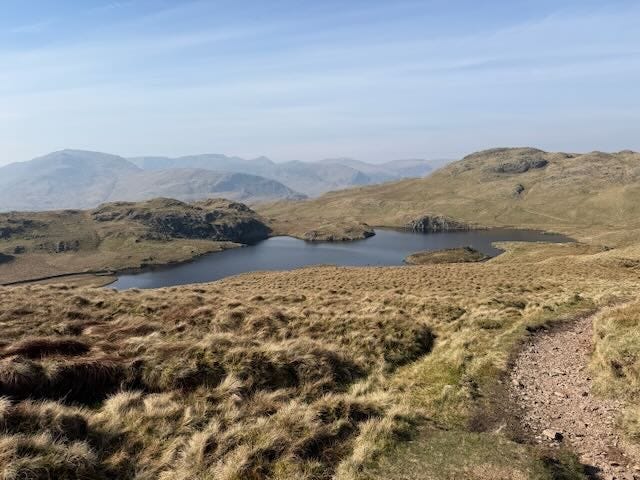
Last month, I hiked in the Cumbrian Fells with a small group.
It was a tough, long day in the mountains of the Lake District - long, arduous, but ultimately walkable, the kind of challenge you do when you want great views and a full-on day in the mountains.
There were twenty-five of us, and most were in their thirties and forties.
I started at the front, finding my pace and getting into the groove. I usually follow the mountain leaders, not to prove anything, but because the pace seems to work for me.
Halfway up the first rocky pass, I felt that familiar burn not just in the legs but in the lungs, the small tightness in the calves. Not pain. Just the body’s first signal that it was working harder than it really wanted to.
The first forty-five minutes to an hour are generally the toughest; you have to find your footing, pace, and walk at a level that feels comfortable.
In the past, I would have ignored the pain and pushed through and stayed with the main group because I don’t like to fall behind or be the slow one.
We pushed hard up the penultimate pass. I would be able to rest, reset, and ready myself for the final ascent.
But as I drew my breath, I knew I could not maintain the pace I had sustained over the last few years; this made me feel angry and sad all at once. Damn, getting old, I breathed to a fellow walker.
And in that moment came the realisation that I do not have to be at the front or in the leading group. It is not a competition or a race, and nobody is going to give me a medal at the end.
No record is being kept, and I have no need to prove anything to anybody, only to myself.
There is only the hike, the day itself and the slow rise of the ground in front of me.
As I slowed, I let the others move ahead. I regrouped and slowly tied my bootlace, even though it did not need tying. And when I started walking again, I deliberately chose a comfortable pace without feeling the need to catch up with the leading group.
What happened next was unexpected.
There was the initial feeling of failure because I had to slow down, and the small voice, the same small voice that has run my whole adult life, “they will think you can’t keep up, you’re too old.” And that frustrated the hell out of me because I am not a slow hiker.
I pushed hard again, because I could hear this inner voice telling me, “ Don’t give up, keep going”.
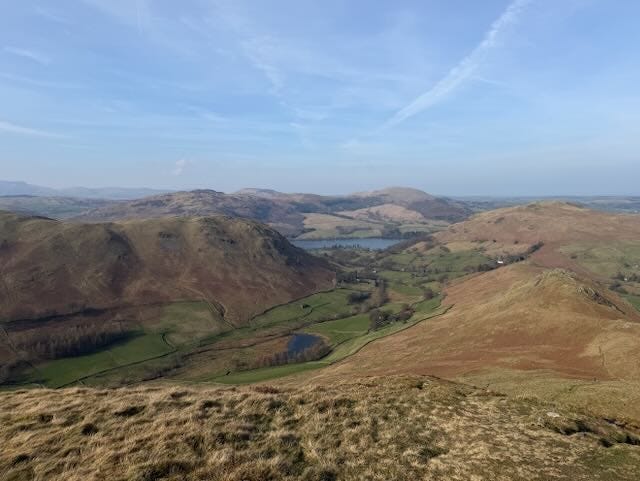
When we reached the summit of this pass, I stopped, appreciated the view, slowed my breathing, and then felt something I had not felt on a hike in a very long time. I really noticed what was around me.
The gentle breeze moving through the grass on the lower slopes, the bird song seemed to be encouraging me to keep going.
I noticed how the light was catching Buttermere Lake below. I noticed my own breath was more even and steady.
I noticed that walking slowly is not actually slower in any meaningful sense, and we arrived at the summit a few minutes after the leading group.
They had not done anything I had missed, and there was no prize for getting there first, just more time to sit and recoup.
Slow is not slower. Slow is sustainable.
I sat on the cairn looking out at the lake and thought it through properly for the first time.
For forty years, I have run a business, raised a family, and kept a household. All of which took time and organisation, and at a pace that was urgent because it had to be.
There was always someone or something waiting at the end of the day. I built my whole identity on getting there first, getting it done, and being the one who could be relied upon to keep up.
And it worked. It worked very well. The business grew. The boys are now adults, and the house remains standing.
But what I did not appreciate until recently is that a pace you cannot sustain forever is, by definition, one that will slow.
Mine has been slowing down for the last couple of years. It began with the silly things, like the reluctance to answer the phone after six. A new awareness of how tired I was on Saturday mornings, the less frenetic Sunday evenings. A creeping resentment at having to get things done yesterday.
What the body started telling me on this hike, I am now choosing to listen to not just when I walk, but also when I am in the Gym or at the end of the working week.
I am no longer trying to be at the front.
I think the hardest part of this is the guilt.
Slowing down feels to me like laziness, an indulgence that I never bent to, something I don’t feel I have earned.
There is a persistent voice, maybe it feels louder for women than for men, I suspect, that says you should still be doing more. Producing more. Achieving more. Being more.
This voice is the residue of a working life.
It certainly is not the truth, but more a habit, and, like all habits, it can be unlearned.
The walk down the final pass was a blessed relief, and although I was languishing with the slower group, it did not bother me because I took in the breathtaking scenery around me and felt unhurried.
When we finally reached the car park, the woman in her forties who had been at the front said to me, “I’m exhausted. How did you find it?”
I thought about it for a moment.
“It was hard work, but the views were amazing. I walked at my own pace, and I am relieved I completed the challenge - slow and steady”.
Slow is not slower. Slow is sustainable, adaptable.
And the pace I walk now and when I next walk the fells, whether in the house, or through the slow afternoons that no longer have a meeting at the end of them, is a pace I think I can keep for the next twenty years.
For the first time in my adult life, I won’t be in a hurry to get to the front because I am exactly where I need to be.
Every Wednesday, I go deep into the stories, thoughts, questions and moments that define this time of life. Subscribe to One Woman’s View and join the conversation.
You can also find me on Saturday Afternoon Reflections.